

Imagine never having to empty your robot vacuum again. You arrive home to spotless floors, and the vacuum has quietly handled everything on its own, including disposing of the debris it collected. Self-emptying robot vacuums transform home cleaning from a chore into a truly hands-free experience. This guide walks you through everything you need to know about choosing the best robot vacuum with self-empty dock, so you can make an informed decision for your specific needs.
Whether you have pets, multiple floor types, or simply want to reclaim time in your busy schedule, a self-emptying vacuum offers convenience that traditional models cannot match. We’ve evaluated the top options available to help you find the perfect fit for your home.
Check out our guide on robot vacuum and mop combinations to explore hybrid cleaning solutions as well.
Pros
- Exceptional value for a combo vacuum-mop with advanced features at this price point
- Truly hands-off operation with 75-day debris capacity eliminates frequent emptying
- Intelligent carpet detection works automatically without programming, a major convenience factor
- Powerful 70X suction and edge-cleaning brush handle pet hair and tracked-in dirt effectively
- Flexible scheduling and customizable cleaning modes adapt to different floor types and messes
Cons
- Battery life of 100 minutes may require multiple cleaning sessions for larger homes over 2,000 sq ft
- Requires 2.4 GHz WiFi network, which may be inconvenient for some modern dual-band setups
- Microfiber mop pad effectiveness depends on water/solution application consistency
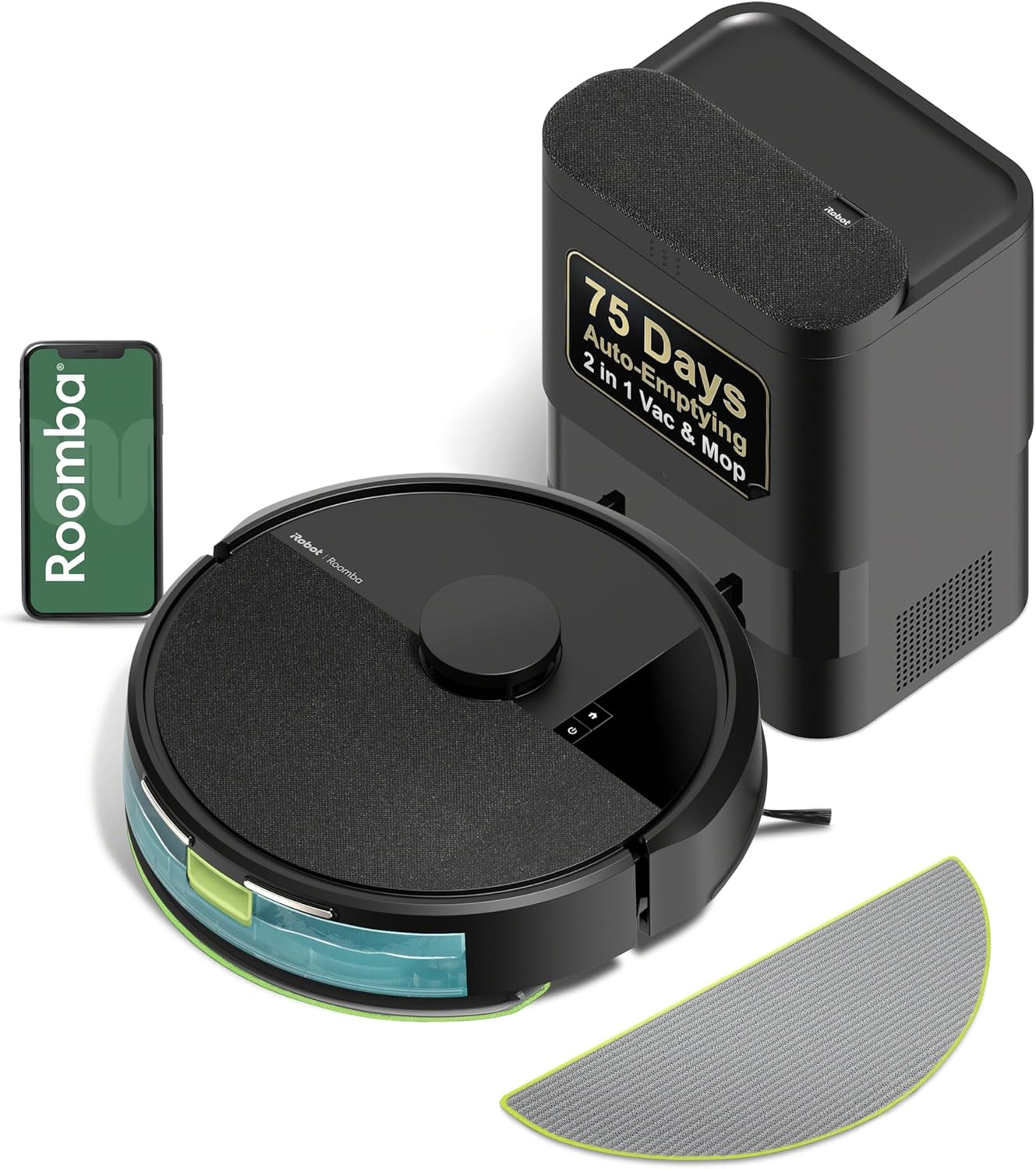
The Roomba 105 Combo is a hybrid robot vacuum and mop designed for busy households that want automated floor cleaning without breaking the bank. It targets families with kids, pet owners, and anyone tired of manual vacuuming and mopping. The combination of two cleaning functions in one device makes it practical for homes with mixed flooring.
What sets this model apart is its intelligent carpet detection, which automatically prevents mopping on rugs while vacuuming them normally. The 70X more powerful suction compared to older Roomba models, combined with a 4-stage cleaning system featuring edge-sweeping brushes and multi-surface bristles, delivers noticeably better dirt pickup. The SmartScrub feature provides 2X deeper scrubbing on high-traffic areas, and the self-emptying dock eliminates the need to manually empty the robot for up to 75 days. Users consistently report satisfaction with how much debris it captures and how clean their floors become.
The LiDAR navigation system maps your home efficiently, and the Roomba Home app offers intuitive scheduling and room-specific cleaning. Voice control integration with Alexa, Google Assistant, and Siri adds convenience. The included extra mop pad is a nice touch for households that want a backup ready to go.
The main limitation is the 100-minute battery life, which works well for apartments and smaller homes but may require multiple sessions for larger spaces. The 2.4 GHz WiFi requirement could be a minor inconvenience for some users with modern dual-band networks. The mop functionality relies on consistent water distribution, so pad maintenance matters.
The Roomba 105 Combo delivers impressive performance and versatility at an accessible price. It excels at automating daily floor maintenance for homes with multiple floor types and pets, though larger homes might need extended cleaning cycles. For families seeking a reliable, feature-rich robot cleaner that handles both vacuuming and mopping, this is a compelling choice.
Cleaning Performance: 70X more power-lifting suction, 4-stage cleaning system, 20% better edge cleaning, 2X deeper scrubbing with SmartScrub, simultaneous vacuuming and mopping capability.
Navigation & Mapping: ClearView LiDAR mapping, obstacle avoidance, anti-fall sensors, smart carpet detection for mop avoidance, logical navigation with scheduling.
Battery & Power: 100-minute battery life, Lithium Ion battery, 7 power levels, WiFi enabled (2.4 GHz). Dimensions: 13.35 inches L x 13.19 inches W x 4.09 inches H.
Control Options: Roomba Home app, button controls on device, voice control (Alexa, Google Assistant, Siri). Includes docking station with auto-empty function and extra mop pad.
Warranty: 1-year manufacturer warranty. Recommended for carpet and hard floor maintenance, pet hair management, and regular home cleaning.
Best For: This robot vacuum is ideal for busy families, pet owners, and anyone with mixed flooring (carpet and hard floors). It works well in homes up to approximately 2,000 square feet per cleaning cycle and excels in households that want both vacuuming and mopping without manual effort.
Consider This Model If: You want a combo vacuum-mop at an affordable price, need automatic carpet detection for worry-free mopping, prefer hands-off cleaning with extended dirt capacity, or want flexible control through app or voice commands. The 75-day debris capacity is especially valuable if you dislike frequent maintenance.
Skip This Model If: Your home exceeds 3,000 square feet and requires single-session coverage, you have a dual-band WiFi network and cannot access 2.4 GHz, or you need premium mopping performance comparable to dedicated mop robots. Also consider alternatives if your home has complex layouts with many obstacles or multiple levels.
Maintenance Tips: Regularly clean the edge-sweeping brush and multi-surface brush to maintain suction power. Replace mop pads as needed and keep the filter clean. Empty the dock bag every 75 days or as needed, and ensure the microfiber pad stays in good condition for best mopping results.
What to Look for When Buying a Self-Emptying Robot Vacuum
Debris Capacity and Emptying Frequency
The primary advantage of a self-emptying dock is reducing how often you manually empty the unit. Look for models that hold 60+ days of debris, which means you might only need to replace a bag once every couple of months. A larger capacity dock with sealed, allergen-trapping bags keeps dust from escaping into your home.
Consider your household size and pet situation. Homes with multiple pets or high foot traffic will fill the dock faster, so a longer capacity window becomes even more valuable.
Suction Power and Cleaning Performance
Self-emptying convenience means nothing if the vacuum doesn’t clean effectively. Seek models with high-performance suction systems that can handle both hard floors and carpets. Multi-stage filtration and specialized brush designs help capture fine dust, allergens, and pet hair.
Power-lifting suction combined with edge-sweeping brushes ensures corners and baseboards receive thorough attention. If you have carpets, verify that the model can adjust suction levels for different floor types.
Smart Navigation and Mapping Technology
Advanced navigation systems like LiDAR mapping help your vacuum move efficiently through your home, avoiding obstacles and preventing falls down stairs. Smart mapping allows you to create keep-out zones and schedule cleaning for specific rooms at specific times.
A quality app integration gives you real-time control and notifications about cleaning progress, filter maintenance, and dock status. Voice assistant compatibility adds another layer of convenience for hands-free operation.
Multi-Surface Capability and Special Features
If you have both hard floors and carpets, combo models that vacuum and mop offer maximum versatility. Some advanced units automatically detect and avoid carpets while mopping, so your rugs stay dry. Adjustable water flow and scrubbing intensity let you customize cleaning for different floor conditions.
For pet owners, check whether the model is specifically designed to handle pet hair. Look at our article on robot vacuums for pet hair to see specialized options that excel with shedding.
Final Thoughts
A self-emptying robot vacuum transforms your cleaning routine by eliminating the most tedious part of robot vacuum ownership. The iRobot Roomba 105 Combo Robot Vacuum & Mop stands out as an excellent choice for households seeking both vacuuming and mopping in one unit, with up to 75 days of hands-free cleaning and intelligent carpet avoidance. Whether you prioritize maximum convenience, superior suction, or combo cleaning capabilities, investing in a self-emptying dock model delivers months of reduced maintenance and consistently clean floors throughout your home.
Frequently Asked Questions
How often do you need to replace the bag in a self-emptying dock? Most quality self-emptying docks hold between 60 and 75 days of debris, meaning you’ll typically replace the bag only once every two to three months. The exact frequency depends on your home size, household traffic, and whether you have pets. High-shedding pets may require more frequent replacements.
Can self-emptying robot vacuums handle pet hair effectively? Yes, many models are specifically engineered for pet hair with powerful suction and specialized brush designs. Look for units with multi-stage filtration that traps allergens, especially important if anyone in your home has allergies. Check the home cleaning category for models rated highly for pet hair management.
Are self-emptying docks loud when the vacuum empties? Most docks produce noise similar to a household vacuum for 10 to 20 seconds during the emptying cycle. If noise is a concern, schedule emptying times when you’re away from home or during hours when sound won’t disturb you. Many models allow you to set preferred emptying times through the app.
What’s the difference between a self-emptying dock and a traditional robot vacuum in 2026? Self-emptying docks use suction to pull debris from the robot into a sealed bag, while traditional vacuums require manual emptying after each cleaning cycle. Self-emptying models cost more upfront but save significant time and effort over months and years of use, making them ideal for busy households.


Write Your Review
No reviews yet. Be the first to share your experience!